How Do Scientists Estimate the Age of Humpback Whale Calves in Samaná Bay?
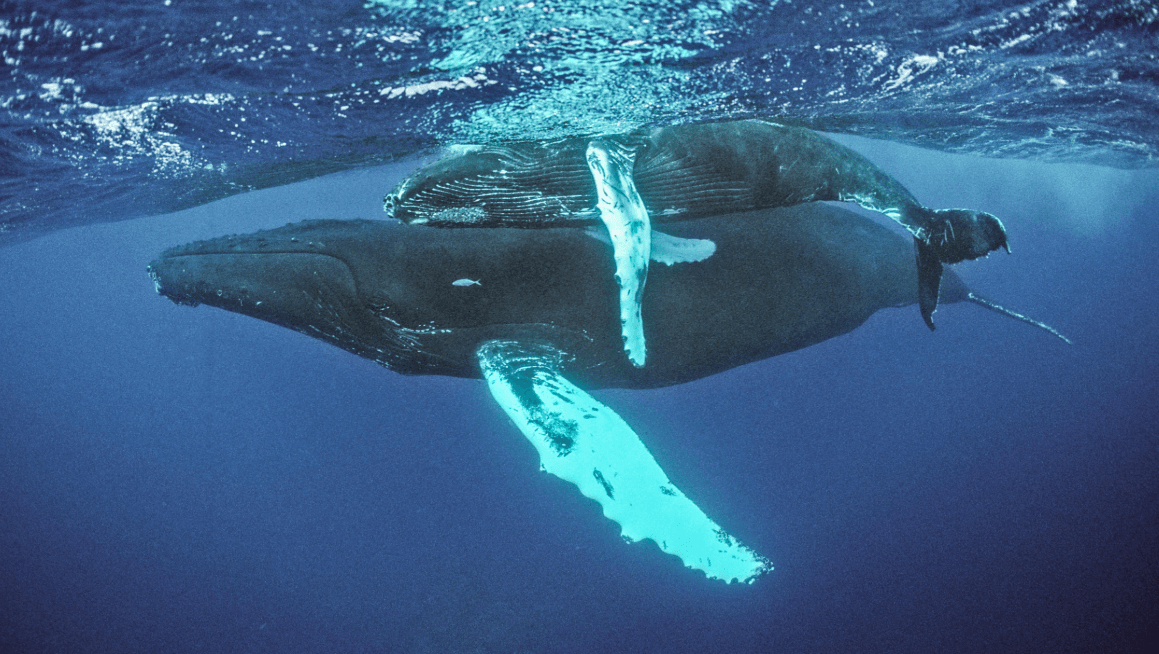
Samaná Bay in the Dominican Republic is known for seasonal humpback whale activity, including observations of adults accompanied by young calves. These encounters provide researchers with opportunities to study early whale development and understand how young animals use breeding habitats.
One question that often arises is how scientists estimate the age of a humpback whale calf when they encounter it in the wild.
Unlike animals that can be examined closely under controlled conditions, free-swimming whales cannot usually be measured or assessed directly. Researchers must rely on available evidence, such as estimated body size, developmental characteristics, observation dates, and information about the adult accompanying the calf.
These clues can help scientists describe a calf's likely developmental stage, but they do not always reveal its exact age.
Why Is a Calf's Age Important to Researchers?
Estimating calf age can help researchers investigate early development, maternal care, and the timing of important stages in a whale's life.
Young humpback whales grow rapidly during their early months. They depend on their mothers for milk and protection while developing the strength and coordination needed for independent movement and eventual migration.
Age information can help researchers explore questions such as:
- How quickly do calves grow during their early development?
- How does calf behavior change as young whales mature?
- How long are calves observed alongside their mothers?
- When do young whales begin displaying different swimming behaviors?
- How does the timing of calf observations vary between breeding seasons?
Reliable age information can improve scientific understanding, but researchers must distinguish between directly documented ages and estimates based on indirect observations.
1. Estimating Age From Body Size
Body size is one potential clue when researchers observe a young humpback whale.
Newborn humpback whale calves are generally around four to five meters long, although individual sizes vary. As they grow, their bodies become larger and more developed.
Scientists can compare an observed calf's estimated size with established information about humpback whale growth. However, estimating length from a boat is difficult because the whale may be partly submerged, moving, or viewed from an unfavorable angle.
Waves, distance, and camera perspective can also distort apparent size.
For these reasons, a visual size estimate may help classify a whale as a young calf, but it should not automatically be converted into an exact age.
2. Examining Physical Development
Researchers may also record visible characteristics that provide context about a calf's development.
These observations can include overall body proportions, apparent size relative to an adult, and the way the young whale moves through the water. Photographs and video can help researchers review these features after an encounter.
However, many visible characteristics are influenced by individual variation, body position, and viewing conditions. Two calves of similar age may not look exactly alike.
Scientists therefore use physical appearance as supporting evidence rather than relying on a single feature to determine age.
3. Recording the Date of the Observation
The date of a sighting is important because humpback whales use breeding areas seasonally.
If researchers observe a very young calf early in a documented breeding season, the date provides a starting point for investigating its likely age. Later sightings may help establish how long the calf has been observed in the area.
Nevertheless, the date on which a calf is first seen is not necessarily its birth date. The animal may have been born before researchers encountered it, and the research team may not have observed the beginning of its stay in the region.
Scientists should therefore distinguish between the age of a calf and the number of days since its first recorded sighting.
4. Using Information About the Mother
When a calf is reliably associated with an identified adult, researchers may gain additional context from the adult's observation history.
For example, photographs may help identify an adult whale seen in previous years. Such records can contribute to long-term studies of individual whales and their reproductive histories when the evidence supports those interpretations.
However, identifying the adult does not establish the calf's exact birth date. Nor does a previous sighting of the adult necessarily reveal when the current calf was born.
Researchers need reliable observations and clear criteria before drawing conclusions about an individual's reproductive history.
5. Comparing Observations Over Time
Repeated observations can help researchers understand how a calf changes during the period it is monitored.
A research team might record the animal's apparent size, swimming behavior, and association with an adult during several encounters. Comparing those records can provide information about development and changes in behavior.
Photographs may also help researchers confirm that observations involve the same calf, although identification can be difficult when young whales lack sufficiently distinctive visible features.
Repeated sightings are most useful when each record includes the date, location, observation conditions, and evidence supporting the identification.
Even with good records, researchers may be able to describe a calf's development more confidently than they can determine its precise age.
6. Can Scientists Determine a Calf's Exact Birth Date?
Sometimes, a whale's birth may be observed or documented closely enough to establish a relatively reliable birth date. In other cases, researchers first encounter a calf days or weeks after it was born.
If a birth date is known, researchers can calculate the calf's age from that date. If the birth date is unknown, they must rely on indirect evidence and acknowledge the resulting uncertainty.
A calf described as very young should not automatically be assigned a specific number of days or weeks old without supporting records.
This distinction matters because inaccurate age estimates can affect studies of growth, survival, reproductive timing, and behavior.
7. Why Visual Age Estimates Can Be Uncertain
Several factors make age estimation difficult during whale-watching and field research.
Individual growth differences: Calves do not all grow at precisely the same rate.
Limited visibility: Researchers may see only part of the animal above the water.
Unknown birth dates: The first sighting may occur well after birth.
Observation gaps: Researchers cannot continuously monitor every whale throughout the day or season.
Identification challenges: It may be difficult to determine whether photographs taken on different dates show the same calf.
These limitations mean that scientists should report age estimates with appropriate uncertainty rather than presenting an indirect estimate as a confirmed fact.
8. What Calf Age Estimates Mean for Research in Samaná Bay
Carefully documented calf observations can contribute to wider research on humpback whale reproduction and the seasonal use of breeding habitat.
When observations are collected consistently over several seasons, researchers may investigate the timing of calf sightings and compare documented developmental stages across years.
However, estimating age from photographs or brief encounters is not sufficient to establish population-wide birth rates, calf survival, or long-term reproductive trends. Those questions require appropriate datasets and dedicated analyses.
Any claims about the ages of particular calves observed in Samaná Bay should be supported by reliable local research records.
Frequently Asked Questions
How old are humpback whale calves when they are born?
Humpback whale calves are newborns when they enter the world, and their birth dates can be established only when the timing is known or reliably documented. Their size and development vary between individuals.
Can scientists tell a calf's exact age by looking at it?
Usually not. Appearance and estimated size can provide clues about developmental stage, but they rarely establish an exact age on their own.
How do researchers know when a calf was born?
They may use direct observations of birth or reliable records that closely establish the birth date. When neither is available, age must be estimated with appropriate uncertainty.
Does seeing a calf beside an adult reveal its age?
No. The association can provide context about the animals' behavior, but it does not reveal the calf's precise age.
Why do scientists record calf sightings over multiple seasons?
Long-term records can help researchers investigate seasonal patterns, identify individual whales where possible, and study reproduction and habitat use. The strength of any conclusion depends on the quality and completeness of the data.
Conclusion
Estimating the age of humpback whale calves in Samaná Bay requires careful interpretation of multiple clues. Researchers may consider body size, visible development, sighting dates, adult identification records, and repeated observations to assess a calf's likely developmental stage.
These methods can provide useful information, but they cannot always establish an exact birth date or age. By recording uncertainty and distinguishing estimates from confirmed observations, scientists can build more reliable knowledge about humpback whale development and breeding-season activity in the Dominican Republic.

Local explorer & expert guide in Isla Saona Oficial.