How Do Scientists Use Humpback Whale Photographs to Track Migration Routes?
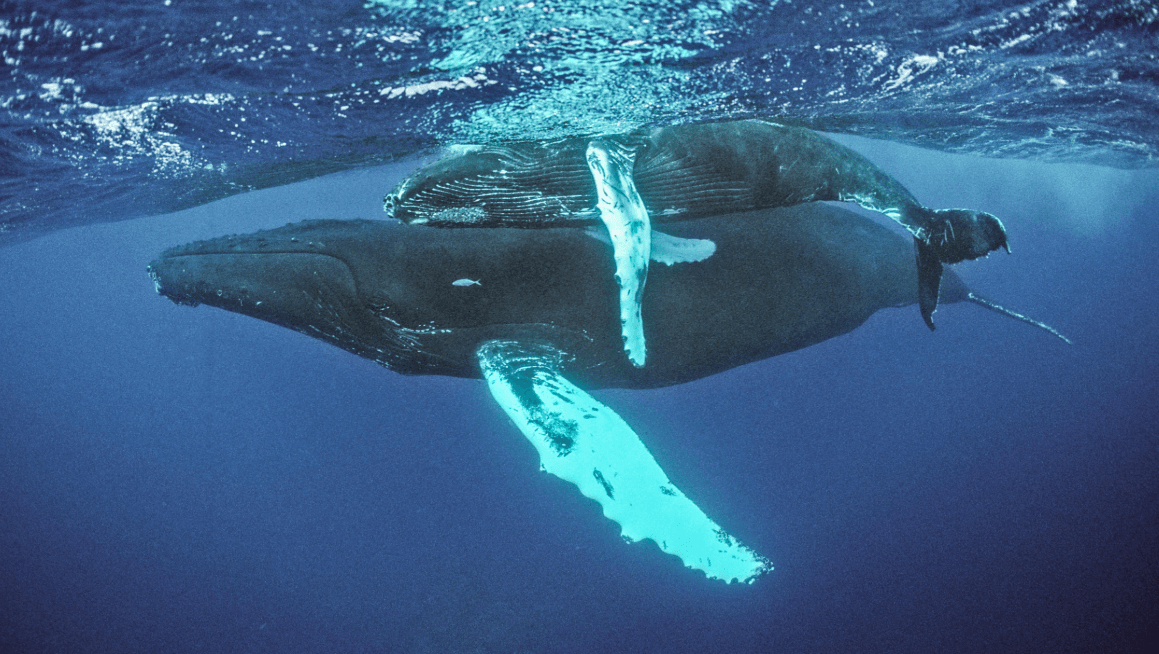
Every whale-watching photograph can preserve a moment that may help scientists understand the lives of humpback whales. A picture taken during an excursion in Samaná Bay, Dominican Republic, might capture an individual that researchers have photographed somewhere else, potentially revealing a connection between distant marine locations.
Humpback whales migrate seasonally between breeding and calving areas in warmer waters and feeding grounds in colder regions. Understanding where individual whales travel, how often they return, and which areas they use is important for studying their populations.
Scientists cannot follow every whale continuously across the ocean. Instead, they combine photographs, sighting records, research databases, and other scientific methods to build a clearer picture of whale movements.
Here is how whale photography contributes to migration research and why observations from places such as Samaná Bay can be valuable.
Why Do Scientists Photograph Humpback Whales?
Photographs allow researchers to document features that may help distinguish one whale from another. Rather than relying only on the number of whales observed during an expedition, scientists can sometimes identify individual animals across multiple encounters.
This process is called photo-identification.
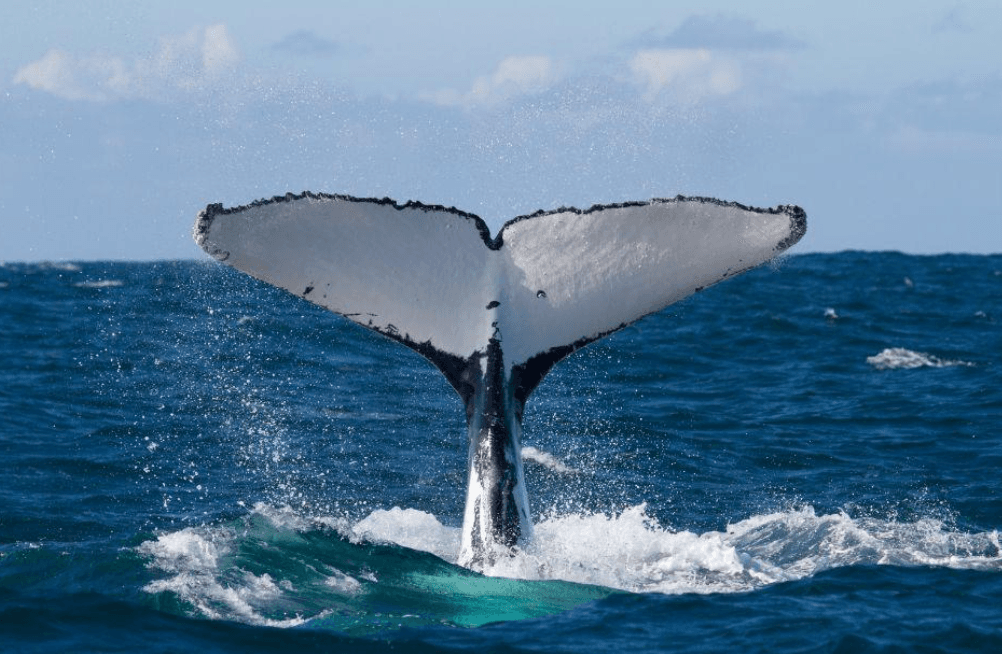
Researchers commonly photograph the underside of a humpback whale's tail flukes because pigmentation patterns, scars, and other visible characteristics can differ among individuals. Depending on the research project, photographs of other body features may also provide useful information.
When a whale is photographed again, researchers can compare the new image with existing records to determine whether it may be an individual already documented.
This creates an opportunity to study whale movements without physically tagging every animal.
How Does Photo-Identification Work?
Photo-identification involves collecting suitable photographs and comparing the visible features of individual animals.
The process generally follows several steps.
Step 1: Photograph the Whale
Researchers or trained observers capture images that show identifiable features clearly. For humpback whales, photographs of the underside of the tail flukes are particularly useful.
Image quality matters. A photograph that is too distant, blurred, poorly lit, or incomplete may not provide enough detail for reliable identification.
Step 2: Record the Sighting Information
Researchers document information associated with the photograph, such as the date, location, and observation circumstances.
Depending on the project, records may also include the observer, image quality, group composition, or other relevant details.
These records provide context for interpreting the photograph later.
Step 3: Compare the Photograph With Existing Records
Scientists compare the new image with photographs in an established identification catalogue or research database.
They examine visible patterns and features to determine whether the whale matches a previously documented individual.
If the evidence is insufficient, researchers may classify the identification as uncertain rather than forcing a match.
Step 4: Record a Confirmed Match
When the photographs provide sufficient evidence, the new sighting can be associated with the whale's existing record.
This allows researchers to document another observation of the same individual at a different time or place.
Over multiple sightings, these records can reveal patterns that would be difficult to discover from isolated photographs.
How Can Whale Photographs Reveal Migration Routes?
A photograph taken at one location provides evidence that a whale was present there at a particular time. When the same individual is identified in photographs from another location, researchers can begin to establish a connection between those observations.
For example, imagine a humpback whale photographed in Samaná Bay during the winter breeding season. Several months later, a research team photographs a whale with matching identification features in a northern feeding area.
If the identification is reliable, the two records can help establish that the same whale was observed in both locations.
Repeated matches involving multiple whales can reveal broader patterns, including:
- Connections between breeding areas and feeding grounds.
- Seasonal movement patterns.
- Areas used by individual whales in different years.
- Possible differences in movement among individuals.
- The extent to which different whale populations share migration routes.
A pair of photographs does not reveal every part of a whale's journey. The animal may have passed through other areas between sightings. Scientists therefore interpret photographic matches alongside additional observations and research evidence.
What Role Does Samaná Bay Play in This Research?
Samaná Bay is an important seasonal destination for observing North Atlantic humpback whales in the Dominican Republic.
During the winter breeding season, whales visit Dominican waters, where mating and calving activities can occur. The bay provides an opportunity for researchers and trained observers to document whales during this part of their annual cycle.
Photographs collected in the region may contribute to long-term identification records. When individual whales can be matched with records from other locations, researchers can investigate connections between the Caribbean breeding grounds and North Atlantic feeding areas.
These connections help scientists understand how different marine habitats are used throughout the year.
However, not every whale photographed in Samaná will necessarily be matched to a known individual elsewhere. Some photographs may not show sufficient identifying features, and some animals may not yet appear in the available catalogue.
Why Are Long-Term Whale Records Important?
A single season can provide useful observations, but long-term records help researchers identify patterns across years.
If the same whale is photographed in several seasons, scientists may be able to investigate whether it returns to a particular breeding area or appears in different feeding locations over time.
Long-term photographic records can also contribute to studies of survival, population structure, and habitat use when combined with appropriate analytical methods.
For example, researchers may compare sightings across several years to investigate whether particular locations are repeatedly used by identified individuals.
These studies require careful interpretation. A whale that has not been photographed for several years has not necessarily died or abandoned a migration route. It may simply have gone unobserved or been photographed somewhere that has not contributed records to the same database.
Can Tourist Photographs Help Whale Research?
Potentially, yes. Photographs taken by visitors can document whale encounters, and some may contain features useful to researchers.
However, a tourist photograph does not automatically become a scientific record. Its usefulness depends on image quality, the information recorded with it, and whether it can be evaluated through a reliable research process.
If you take photographs during a whale-watching trip in Samaná, consider these practices:
- Keep the original image rather than relying only on a heavily edited copy.
- Record the date and general observation location when possible.
- Preserve the full image so identifiable features are not accidentally cropped out.
- Avoid adding unsupported claims about the whale's identity or travel history.
- Follow the submission guidelines of a recognized research or whale-identification project if you wish to share your images.
Researchers may not be able to use every submission, but properly documented photographs can sometimes contribute to wider knowledge.
Always prioritize safe behavior on the boat and follow the guide's instructions rather than trying to obtain a particular photograph.
How Do Scientists Handle Uncertain Identifications?
Not every photograph produces a clear match. Two whales may have similar visible patterns, while a single whale may look different across photographs because of lighting, viewing angle, image quality, or changes to visible features.
For this reason, researchers assess the quality of an image and compare multiple identifying details whenever possible.
They may categorize a match as confirmed, probable, or uncertain according to the methods used by their project. The exact categories and standards vary among research programmes.
Reliable research requires scientists to acknowledge uncertainty instead of treating every resemblance as proof.
This matters because an incorrect identification could create a false connection between two locations and lead to an inaccurate interpretation of migration.
Do Photographs Reveal the Whale's Entire Journey?
No. Photographs document sightings, not every movement between them.
If a whale is photographed in Samaná Bay in February and later identified in another region in summer, scientists can establish a connection between those documented observations. They cannot determine the exact route, every stop, or the animal's precise travel time from those two images alone.
Additional sightings, tracking studies, and other research methods may provide more detail.
Combining different sources of evidence gives researchers a more complete understanding of migration than relying on photographs in isolation.
Frequently Asked Questions
Can scientists identify every humpback whale from a photograph?
No. Identification depends on whether the photograph shows sufficiently clear and distinctive features. Some images cannot be matched confidently to an individual.
Why are humpback whale tail photographs useful to researchers?
The underside of a humpback whale's tail often has distinctive pigmentation patterns and other visible features. Researchers can use these patterns to compare individuals across photographs.
Can a whale photographed in Samaná Bay be identified in another country?
Yes, if researchers have suitable photographs of the same individual from another location and can establish a reliable match. This can provide evidence of a connection between the two locations.
Can I send my whale photographs to scientists?
Some research programmes and whale-identification projects accept photographs or observations from members of the public. Check the project's requirements before submitting images, because not every photograph will be suitable.
Do photographic records show exactly where a whale travels?
No. They document confirmed sightings at particular times and places. Other research methods may be needed to understand movements between those observations.
Why do scientists keep whale photographs for many years?
Long-term records allow researchers to compare sightings across seasons and years. These comparisons can support studies of migration, population patterns, habitat use, and individual whale histories.
Final Thoughts
Humpback whale photographs are more than souvenirs from a whale-watching excursion. When they clearly capture identifying features and are accompanied by reliable sighting information, they can contribute to research into migration and population patterns.
In Samaná Bay, observations made during the winter breeding season may help scientists connect individual whales with records from other parts of the North Atlantic.
Photo-identification does not reveal every detail of a whale's journey, but it provides a valuable way to study animals that move across enormous distances.
The next time you photograph a humpback whale, remember that a well-documented image may preserve information beyond the moment itself. With careful observation and responsible data collection, photographs can help deepen our understanding of these remarkable ocean travelers.

Local explorer & expert guide in Isla Saona Oficial.