Humpback Whale Songs: How Whales Communicate
Beneath the surface of the ocean, humpback whales produce sounds that can travel through the water over considerable distances. Some of these sounds form complex, repeated sequences known as whale songs, which have fascinated marine researchers for decades.
For visitors interested in Samaná Bay in the Dominican Republic, whale sounds reveal another dimension of marine life that cannot always be experienced through visual whale watching alone.
But how do scientists study these underwater sounds How can researchers distinguish one sound pattern from another, and what can changing whale songs tell us about animal behavior?
Although researchers have learned a great deal about humpback whale acoustics, some aspects of whale communication remain uncertain. Understanding both the discoveries and the unanswered questions makes this subject especially interesting.
1. What Makes a Humpback Whale Song?
A humpback whale song is a structured sequence of sounds that can include moans, cries, pulses, and other repeated vocal elements.
Rather than producing one isolated noise, a singing whale may repeat recognizable patterns that form longer sequences. Researchers organize these sounds into units, phrases, and themes to analyze their structure.
A song may continue for an extended period, with patterns repeated and modified over time. The details differ among populations and can change as songs evolve.
Not every sound made by a humpback whale is a song. Whales also produce shorter vocalizations and other sounds that may occur during social interactions or different activities.
This distinction matters because scientists study songs and individual calls in different ways.
2. How Do Researchers Record Whale Songs?
Scientists often use specialized underwater microphones called hydrophones to record whale sounds.
Hydrophones can be deployed from research vessels, attached to suitable recording systems, or incorporated into underwater acoustic monitoring equipment. Some systems collect recordings over long periods, allowing researchers to study when whales vocalize and how their sounds change.
Researchers may analyze recordings for:
- The timing and duration of sounds.
- Repeated patterns and sequences.
- Differences in pitch and frequency.
- Changes in song structure.
- The presence of other sounds in the marine environment.
Recordings can reveal acoustic activity even when whales are underwater or beyond the range of visual observation.
However, a recording does not automatically reveal which individual whale produced a sound. Identifying the source may require additional evidence, such as visual observations, specialized tracking methods, or carefully designed research studies.
3. What Is a Whale Song Spectrogram?
A spectrogram is a visual representation of sound. It shows how the frequency and intensity of a sound change over time.
Researchers use spectrograms to examine patterns that may be difficult to distinguish by listening alone.
For example, a spectrogram can show whether a sound rises or falls in frequency, how long it lasts, and whether similar elements occur repeatedly.
By comparing spectrograms from different recordings, scientists can investigate similarities and differences between whale songs.
This technique is useful for studying how songs change over days, months, and years. It also helps researchers document vocal patterns in a consistent format that can be shared and compared.
A spectrogram does not translate a whale song into human language. It helps describe the sound's physical characteristics, while the meaning and function of many vocal patterns remain subjects of scientific research.
4. Do Humpback Whales Sing the Same Song Every Year?
No. Humpback whale songs can change over time.
Researchers have documented song changes within populations and, in some cases, the spread of new song patterns between groups of whales.
These changes are especially interesting because they suggest that some aspects of whale vocal behavior are learned rather than being entirely fixed from birth.
In certain populations, many singing males may adopt similar song patterns, and the patterns can gradually change as new elements appear and spread.
Scientists compare recordings collected in different seasons and locations to investigate these developments.
It is important not to assume that all humpback whales worldwide sing the same song. Song patterns can differ among populations, and the timing and extent of changes vary.
5. Why Do Researchers Study Whale Songs?
Whale songs provide useful information about the behavior of animals that spend much of their lives underwater.
Researchers study acoustic recordings to investigate several questions.
Seasonal activity: Scientists can examine when whale vocalizations become more common in a particular region.
Song development: Repeated recordings help researchers identify changes in song structure over time.
Population comparisons: Acoustic patterns may help scientists investigate differences between groups of whales, although sounds alone do not always establish an individual's identity or population.
Environmental conditions: Researchers can examine how underwater noise affects the detection and characteristics of whale vocalizations.
Behavioral research: When recordings are combined with visual observations or other data, scientists can investigate how vocal activity relates to whale behavior.
These studies contribute to a broader understanding of humpback whales without assuming that every sound has a known meaning.
6. Are Humpback Whale Songs a Form of Language?
Humpback whale songs are complex, organized vocal displays, but scientists cannot simply translate them into human sentences.
Researchers can identify recurring patterns and measure how sounds change. They can also investigate possible functions through observation and controlled analysis.
However, the precise meanings of many sounds and song sequences remain uncertain.
It is reasonable to describe humpback songs as a sophisticated form of animal vocal communication. It would be misleading to claim that researchers understand every message or can reliably interpret a song as a specific statement.
Scientific research continues to explore how these vocalizations function in social behavior and reproduction.
7. Can Whale Songs Be Heard During a Samaná Whale-Watching Tour?
Not necessarily.
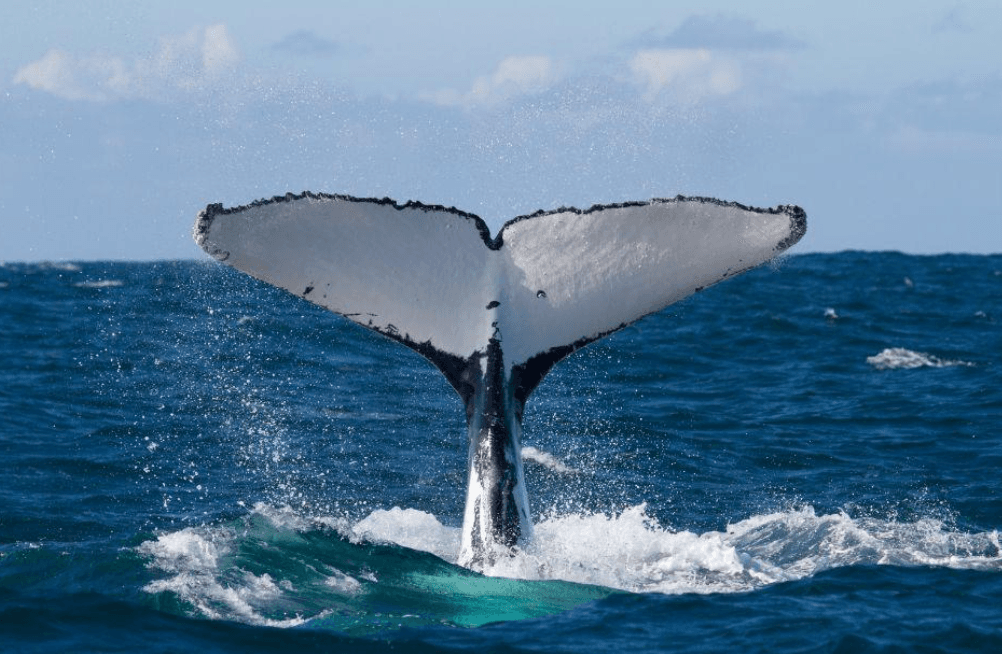
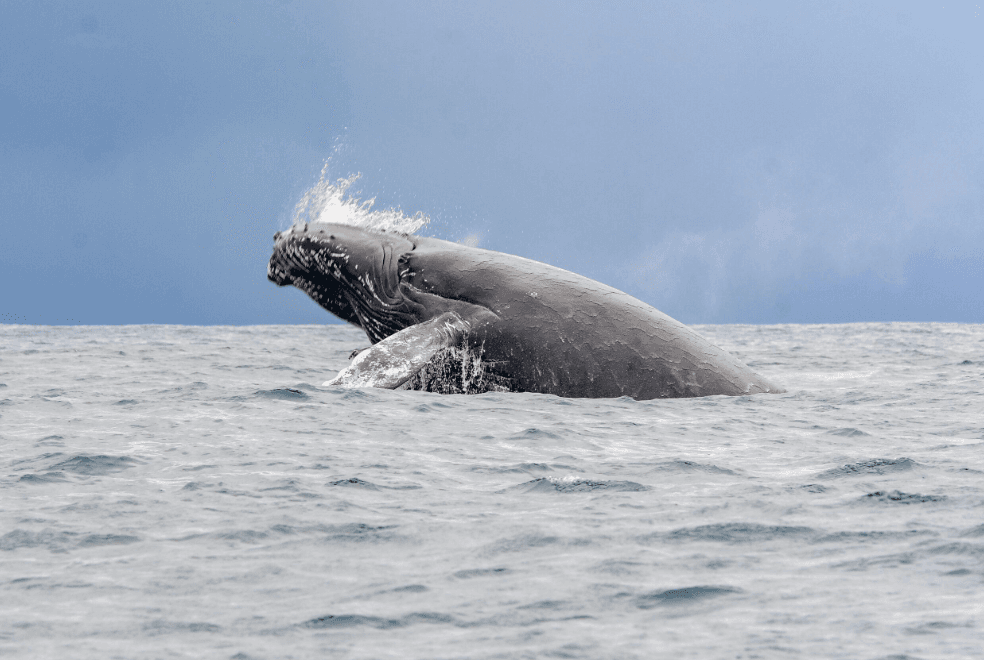
Most standard whale-watching excursions focus on visual sightings from a boat. Passengers may see whales surfacing, breaching, raising their tails, or swimming near the surface, but underwater songs are not always audible to people on board.
Sound travels differently underwater than it does in air, and the ability to hear whale vocalizations depends on several factors, including the sound's frequency, distance, background noise, and the equipment being used.
Specialized hydrophones can make underwater sounds available for research or educational listening, but they are not included on every whale-watching trip.
If listening to whale sounds is important to you, ask the operator whether the excursion includes an appropriate underwater listening system or an educational demonstration. Do not assume that every tour offers live acoustic monitoring.
8. How Does Underwater Noise Affect Whale Research?
The ocean is not acoustically silent. Waves, weather, marine animals, and human activities all contribute to underwater sound.
Vessel engines, shipping, and some industrial activities can add noise to marine environments. Depending on the circumstances, this noise may mask whale vocalizations or make recordings more difficult to interpret.
Scientists account for background noise when analyzing acoustic data. They may compare recordings collected at different times, use filtering techniques, or select monitoring locations suited to their research questions.
Noise can also be relevant to whale conservation. Researchers investigate how human-generated sounds affect marine mammals, including whether noise interferes with their ability to detect sounds or communicate under certain conditions.
The effects depend on the sound's characteristics, its intensity and duration, the environment, and the animals' behavior.
9. How Can Visitors Support Whale Research and Conservation?
Visitors do not need specialized equipment to contribute to responsible whale tourism.
They can choose operators that follow local regulations, respect wildlife-viewing distances, and avoid disturbing the animals to obtain closer views.
Other useful practices include:
- Follow the captain's and guide's instructions.
- Keep noise and disruptive behavior to a minimum.
- Never attempt to touch, feed, or pursue whales.
- Avoid using unauthorized equipment that could disturb wildlife.
- Learn from reputable marine research and conservation organizations.
Travelers can also support public education by sharing accurate information about whale behavior and avoiding claims that scientists have translated whale songs or decoded every vocalization.
Responsible tourism helps people appreciate the complexity of marine life while respecting the limits of what researchers currently know.
Frequently Asked Questions
What is a humpback whale song?
It is a structured sequence of repeated sounds, including different vocal elements that can form longer patterns. Scientists study these sequences to understand whale acoustics and behavior.
How do scientists record whale songs?
Researchers commonly use hydrophones, which are underwater microphones designed to detect and record sounds beneath the surface.
Can scientists understand what whale songs mean?
Scientists can identify patterns and investigate possible functions, but they cannot translate all humpback whale songs into human language. Many details of their communication remain under investigation.
Do humpback whale songs change?
Yes. Researchers have documented changes in song structure over time, including the spread of new patterns within some populations.
Can tourists hear whale songs in Samaná Bay?
Not on every trip. Standard whale-watching tours generally focus on visual sightings. Underwater listening requires suitable equipment and may be offered only by specialized educational or research experiences.
Why are whale songs important to conservation?
Acoustic research helps scientists study whale activity and investigate how underwater noise affects the detection of vocalizations. This information can contribute to marine conservation and management.
Final Thoughts
Humpback whale songs provide researchers with a remarkable opportunity to study animal vocal behavior beneath the ocean's surface. Through hydrophones, spectrograms, and long-term recordings, scientists can document patterns and investigate how these sounds change over time.
Samaná Bay is widely known for seasonal humpback whale sightings, but the animals' lives extend far beyond what visitors can see from a boat. Their underwater acoustic world is another part of their biology that continues to inspire scientific research.
The more we learn about whale songs, the better we can appreciate both the complexity of these marine mammals and the questions that remain unanswered. Respectful whale watching, accurate education, and continued research all help deepen our understanding of the ocean.

Local explorer & expert guide in Isla Saona Oficial.