How Do Humpback Whales Eat Without Teeth?
Humpback whales are enormous marine mammals, yet they do not have rows of sharp teeth like many other large predators. Instead, they use a specialized feeding system that allows them to capture tiny prey and small fish from the ocean.
This unusual method is one of the most fascinating parts of humpback whale biology. A whale may weigh many tonnes, but some of the animals it feeds on are only a few centimetres long.
So, how does a humpback whale collect enough food to support such a large body?
The answer lies in baleen plates, expandable mouth tissues, and a feeding process that separates prey from seawater. Understanding this process gives visitors another reason to appreciate humpback whales during the whale-watching season in Samaná, Dominican Republic.
Do Humpback Whales Have Teeth?
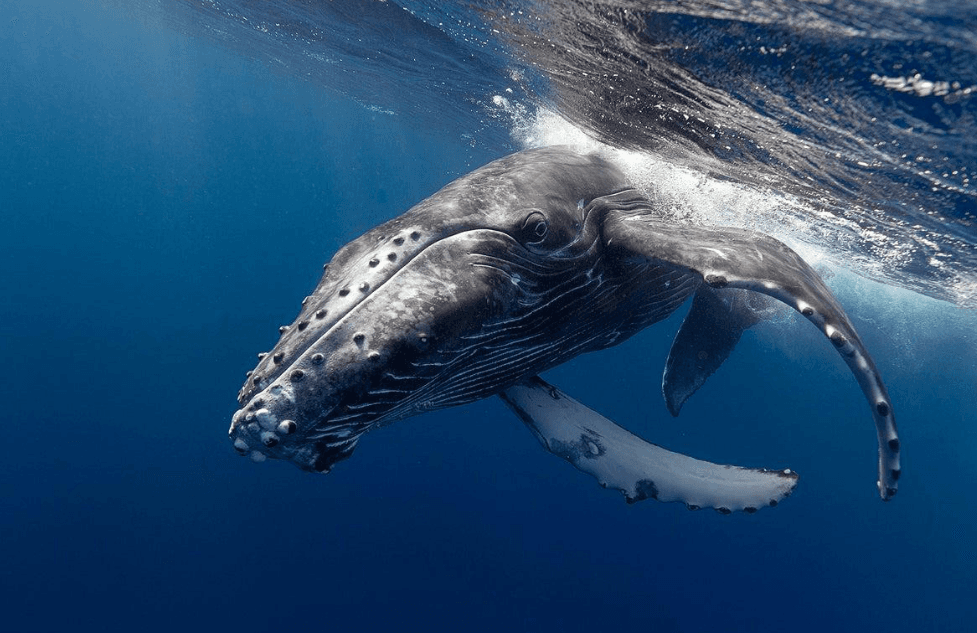
Adult humpback whales do not have conventional teeth. Instead, they have rows of baleen plates hanging from the upper jaw.
Baleen is a tough, flexible material made primarily of keratin, the same broad family of structural proteins found in human hair and fingernails. The plates have fringed inner edges that form a filtering surface.
When a humpback whale feeds, water and prey enter its mouth together. The whale then pushes the water back out through the baleen, while suitable prey is retained inside.
This feeding strategy is known as filter feeding.
Unlike a toothed predator that catches and bites individual animals, a humpback whale can gather large quantities of small prey in a feeding event. Its baleen works like a biological filtering system, although it is much more complex than an ordinary household strainer.
What Is Baleen, and How Does It Work?
Baleen plates are among the most important structures involved in humpback whale feeding.
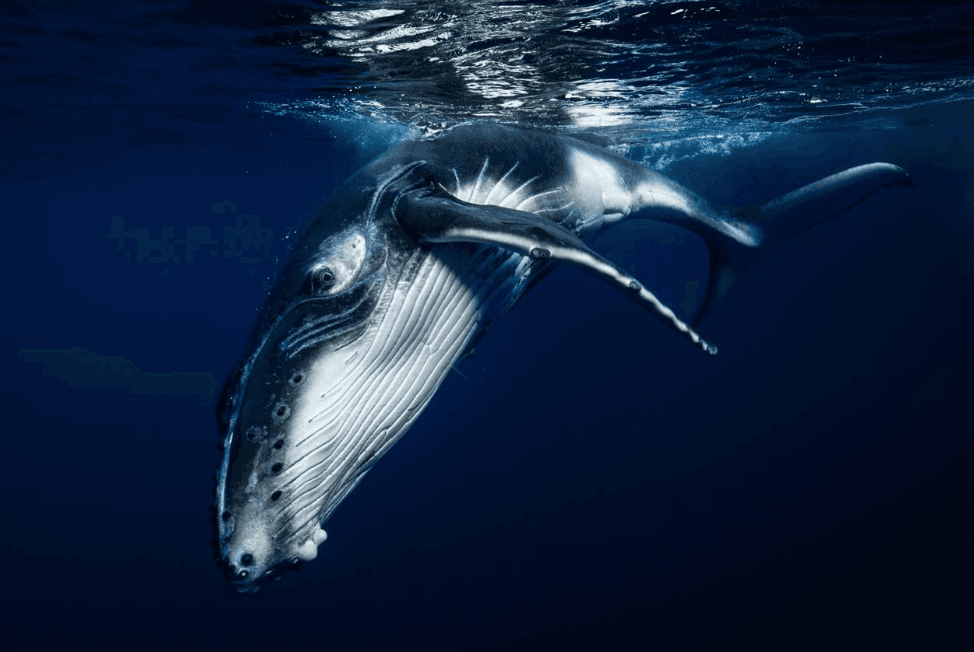
They hang from the upper jaw in two rows, with many plates positioned alongside one another. The inner edges have fine, hair-like fringes that help trap prey as water flows out of the mouth.
The plates are strong enough to withstand repeated feeding movements while remaining flexible enough to function as part of the whale's filtering system.
Here is how the process works:
- The whale takes in prey and water. During a feeding event, the whale opens its mouth and gathers water containing prey.
- The mouth expands. Flexible tissues allow the mouth and throat region to accommodate a large volume of water.
- The whale closes its mouth. Muscular movements help move the water through the filtering system.
- Water flows out. Water passes outward through the baleen plates.
- Prey remains inside. Small fish and other suitable prey are retained and then swallowed.
The exact movements depend on the feeding technique being used. Not every feeding event looks the same, and some methods involve coordinated movements by several whales.
What Do Humpback Whales Eat?
Humpback whales mainly feed on small schooling fish and tiny crustaceans, including krill. The precise diet depends on where the whale is feeding and which prey species are available.
Krill are small, shrimp-like marine crustaceans that can gather in large concentrations. Certain small fish also form dense schools, creating opportunities for a humpback whale to capture many prey animals in a single feeding movement.
Humpback whales do not normally feed on large marine mammals or people. Their baleen feeding system is adapted to collecting relatively small prey.
Their diet is not identical in every ocean region. A whale feeding in one part of the world may encounter a different combination of prey from a whale feeding elsewhere.
This matters when learning about humpback whales in Samaná. The whales that visit the Dominican Republic during the breeding season are generally associated with reproductive activities rather than intensive feeding in the warm breeding waters. Their main feeding periods occur in productive feeding areas, often at higher latitudes.
How Can Such a Large Whale Eat Tiny Animals?
A humpback whale's large body requires substantial energy. Small prey can provide that energy when the whale captures enough of it.
The key is the concentration of food. A dense school of fish or a large aggregation of krill can offer many prey animals within a relatively small area.
Rather than chasing one tiny animal at a time, a humpback whale may move through a concentrated patch of prey and capture many animals together.
Some feeding methods involve rapid lunges in which the whale accelerates toward a prey patch with its mouth open. Other methods involve coordinated movements, turns, or behaviors that help bring prey together before capture.
The whale's body, mouth, baleen, and feeding behavior work together. No single feature explains the entire process.
Feeding is also energetically demanding. A whale benefits when the amount of energy gained from the prey exceeds the energy used to find, pursue, and capture it.
What Is Lunge Feeding?
Lunge feeding is one of the best-known feeding techniques used by humpback whales.
During a lunge, the whale moves rapidly toward a concentration of prey with its mouth open. It takes in a large amount of water along with the fish or crustaceans in front of it.
The whale's expandable mouth tissues help accommodate the incoming water. After the lunge, the whale filters the water through its baleen and swallows the retained prey.
A lunge may produce a dramatic splash or expose parts of the whale's head and body. However, not every lunge creates a spectacular surface display, and much of the feeding process can happen underwater.
This technique allows humpback whales to exploit concentrated prey efficiently, although its success depends on prey density, the whale's condition, and the circumstances of the feeding event.
For visitors who see humpback whales in Samaná, it is useful to know that a dramatic movement does not automatically indicate feeding. During the breeding season, whales may also surface, roll, dive, or move in ways associated with other activities.
How Do Humpback Whales Separate Food From Water?
The filtering process begins after prey-filled water enters the whale's mouth.
The whale's tongue and muscular movements help move water toward the sides of the mouth. As water exits, the baleen plates retain suitable prey. The prey is then swallowed.
The baleen fringes are important because they create a surface that allows water to pass while helping keep prey inside. The filtering system must be effective without blocking the flow of water completely.
This is a highly specialized adaptation. Humpback whales can process water containing many small prey animals without needing teeth to chew each one individually.
Once swallowed, the prey passes into the digestive system, where nutrients are broken down and absorbed.
It is worth remembering that baleen does not mean a whale simply swallows every object in the water. The feeding process is adapted to prey capture, and the whale's behavior and the properties of its filtering structures influence what is retained.
Do Humpback Whales Chew Their Food?
Humpback whales do not chew food in the same way that humans do.
They capture and filter prey through their baleen, then swallow the retained food. Their digestive systems process the food after it has been swallowed.
This differs from animals that use teeth to bite, tear, or grind their meals before swallowing.
The absence of conventional teeth does not make humpback whales less effective feeders. Their feeding system is adapted to collecting small prey in quantities, rather than processing individual animals through repeated chewing.
This is one reason humpback whales are grouped among the baleen whales, a group that also includes other large species with baleen-based feeding systems.
How Is Baleen Feeding Different From the Feeding of Toothed Whales?
Whales are not all equipped to eat in the same way.
Baleen whales, including humpback whales, use baleen plates to filter prey from water. Toothed whales, such as dolphins and sperm whales, have teeth that help them capture prey, although their feeding methods vary considerably among species.
The distinction is not simply about size. It reflects different evolutionary adaptations and feeding strategies.
A humpback whale may gather many small prey animals in one feeding event. A toothed whale may use its teeth to grasp prey such as fish or squid, depending on the species.
Neither group follows a single universal feeding pattern. Some toothed whales use suction to capture prey, and different baleen whales use different approaches to gathering food.
Understanding these differences helps explain why a humpback whale's mouth looks and functions differently from the mouth of a dolphin.
Do Humpback Whales Feed in Samaná Bay?
Samaná is widely known as a seasonal destination for observing humpback whales, especially during the winter breeding period in the wider region.
During this period, whales are commonly associated with activities such as courtship, mating, calving, and caring for young. Their presence in the area does not mean that they are actively feeding whenever visitors see them.
Humpback whales generally feed in productive waters where prey is abundant, often during their seasonal feeding periods in colder regions. They can rely on stored energy while spending time in breeding areas where food may be less available.
However, feeding patterns can vary by individual and location, and it is best not to assume that a whale is fasting or feeding based solely on a brief sighting.
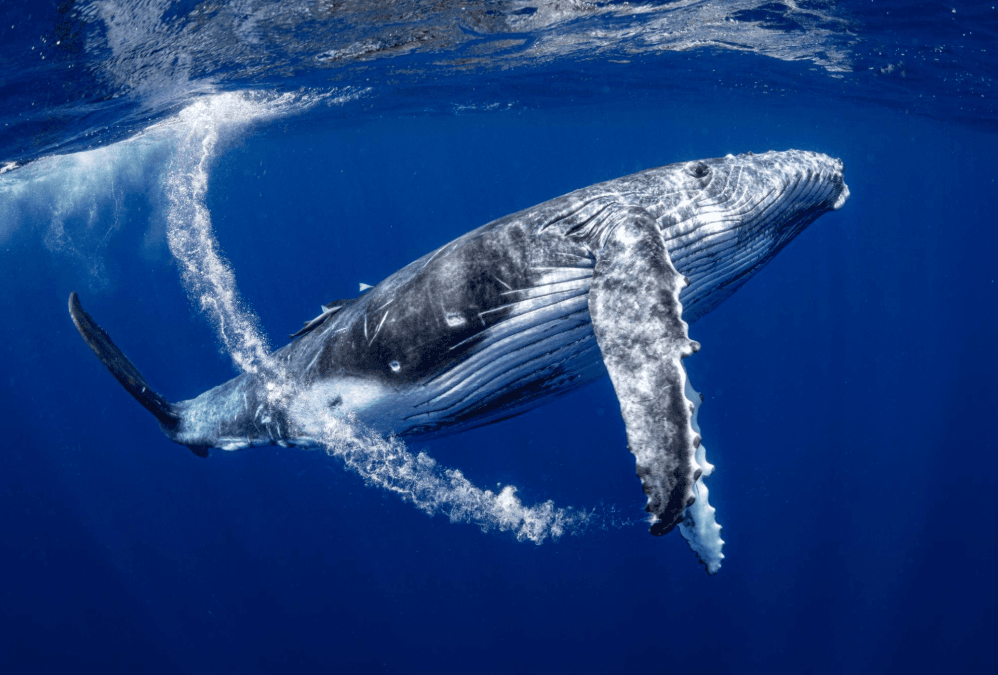
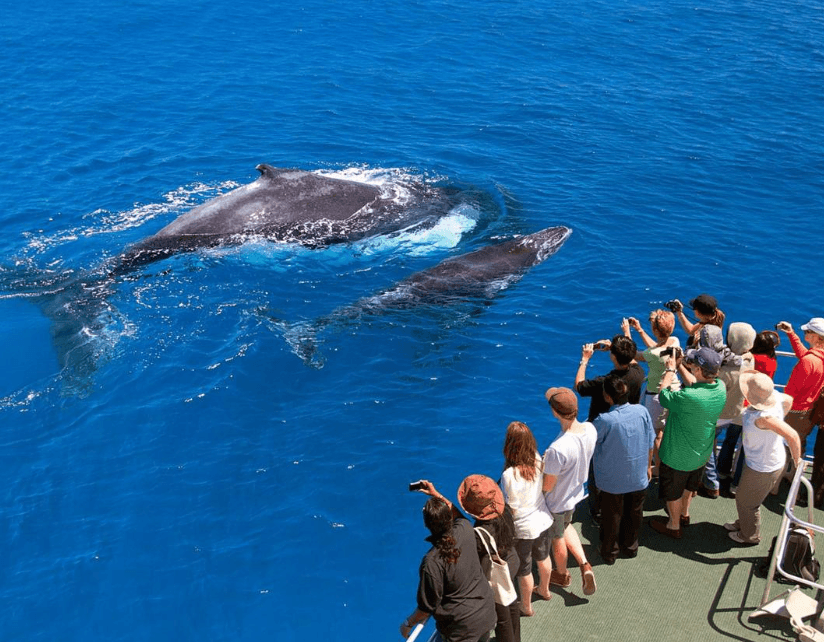
If you take a whale-watching trip in Samaná, you may observe surfacing, diving, tail movements, or social interactions. These behaviors can be fascinating even when no feeding occurs.
A responsible guide can help explain what is known about the whales' behavior while avoiding unsupported claims about what an individual animal is doing.
Why Is Feeding Behavior Important for Humpback Whale Conservation?
Humpback whales depend on healthy marine ecosystems that provide enough suitable prey to support their energy needs.
Changes in prey availability can affect where whales feed, how much time they spend searching for food, and the energy they gain from feeding. Ocean temperatures, currents, food-web changes, and other environmental conditions can influence the distribution of prey.
Human activities can also affect marine ecosystems. Pollution, entanglement in fishing gear, vessel-related risks, and changes in ocean conditions are among the concerns relevant to whale conservation.
Protecting humpback whales therefore involves more than safeguarding the places where people watch them. It also means conserving the wider ocean environments on which their feeding and breeding cycles depend.
Responsible wildlife tourism can help people appreciate these animals and develop a stronger interest in marine conservation. Visitors can contribute by choosing operators that follow applicable rules, listening to safety guidance, and avoiding behavior that disturbs wildlife.
What Can Visitors Learn About Feeding During Whale Watching?
Even if you do not witness a feeding event, learning about baleen can make a whale-watching trip more informative.
During your excursion, pay attention to how the whale moves through the water. A surface appearance, a dive, or a turn may offer clues about its movement, but behavior should not be assigned a definite purpose without sufficient evidence.
If your guide discusses feeding, you can ask about the difference between breeding areas and feeding grounds, how baleen works, and what humpback whales eat in different parts of their range.
Photographs can also help you revisit visible features after the trip. Keep in mind, however, that a surface photograph rarely reveals the full process of underwater feeding.
The most rewarding wildlife encounters are not always the most dramatic. Observing a whale calmly surfacing and learning about its biology can be just as valuable as witnessing an impressive movement.
Plan Your Samaná Whale-Watching Excursion
Interested in seeing humpback whales in the Dominican Republic Samaná is a popular place to consider during the regional whale-watching season.
Before booking, confirm the excursion's departure point, operating dates, duration, transportation arrangements, included services, and cancellation terms directly with the provider. Availability and tour features vary, so check the current details before making a decision.
Choose a responsible operator that respects wildlife-viewing regulations and prioritizes passenger safety. Sightings and specific behaviors cannot be guaranteed because the whales move freely in their natural environment.
Explore available Samaná whale-watching excursions and plan an experience that fits your schedule. Understanding how these whales feed, migrate, and reproduce can make your time on the water more meaningful.
Frequently Asked Questions
1. How do humpback whales eat without teeth?
Humpback whales use baleen plates that hang from the upper jaw. They take in water containing prey, filter the water out through the baleen, and swallow the prey that remains.
2. What is humpback whale baleen made of?
Baleen is made primarily of keratin, a structural protein also found in human hair and fingernails.
3. Do humpback whales eat krill?
Yes. Krill are an important food source for humpback whales in many feeding areas. Their diet can also include small fish, depending on prey availability and location.
4. Can humpback whales eat large fish?
Humpback whales mainly capture small prey, including schooling fish and small crustaceans. Their feeding system is adapted to gathering prey rather than hunting large animals.
5. What is lunge feeding?
Lunge feeding is a technique in which a humpback whale moves rapidly toward a concentrated patch of prey with its mouth open, taking in water and prey before filtering the water through its baleen.
6. Do humpback whales feed while visiting Samaná?
Humpback whales visit the Samaná region primarily during their seasonal breeding period. They are generally associated with breeding and reproductive activities there, while major feeding periods occur in productive feeding grounds. Individual behavior can vary.
7. Do all whales use baleen to eat?
No. Baleen whales filter prey using baleen plates, while toothed whales use teeth and other feeding adaptations. Feeding strategies differ among species.
8. Why is baleen important for whale survival?
Baleen allows humpback whales to capture many small prey animals efficiently. This helps them obtain the energy needed to support their large bodies and demanding seasonal migrations.
Conclusion
Humpback whales do not need conventional teeth to capture food. Their baleen plates, flexible mouth tissues, and specialized feeding behaviors allow them to collect krill and small fish from the ocean.
This feeding system connects the whale's anatomy to its wider life cycle, from finding food in productive waters to migrating between feeding and breeding areas.
When you visit Samaná for whale watching, remember that every surface appearance is only a small glimpse into a much larger life beneath the water. Learning how humpback whales feed is one way to appreciate the remarkable adaptations that help these animals survive.

Local explorer & expert guide in Isla Saona Oficial.